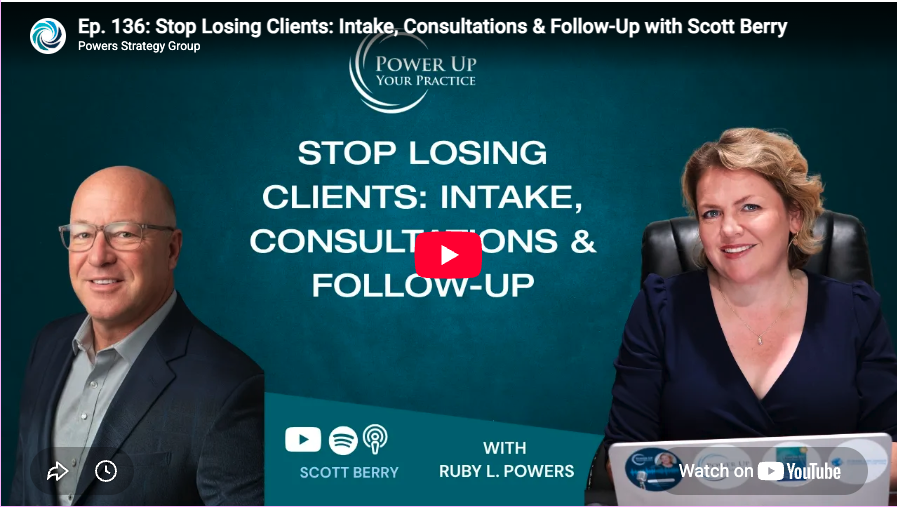


Scott Berry was invited to join *Coffee with Experts* to share his perspective on growing law firms through smarter marketing and stronger intake systems.
He explains how MarketCrest approaches SEO, paid advertising, lead conversion, and ROI while discussing how AI is changing the way agencies work. Scott also shares practical insights on the systems law firms need to turn more opportunities into clients.
Read The Full Transcript Below
Table of Contents
Dawood Bukhari: Hello, everyone. Today we have with us Scott Berry, founder and Chief Marketing Officer at MarketCrest, an award-winning digital marketing agency specializing in growth strategies for immigration and family law firms. Scott is also an award-winning podcast host and brings immense experience to the industry.
Scott, welcome to the show.
Scott Berry: Thank you very much. I’m glad to be here. I appreciate it.
Why Immigration and Family Law Firms?
Dawood Bukhari: Scott, why law firms, and particularly immigration and family law? How did that happen?
Scott Berry: It wasn’t by design. We’ve all heard stories where people stumbled into something and it turned out beautifully, and this is one of those stories.
I came from a corporate background as a Chief Marketing and Sales Officer. When I started the marketing agency 10 years ago, one of our first clients was an immigration law firm. He was doing about $800,000 a year in sales and had hired three different consultants to help him grow, but none of them had been successful.
Like a lot of people, he wanted to become a seven-figure firm. He hired us, and we took him from $800,000 to $3 million in one year, then from $3 million to $5 million in the second year. He’s been able to stay at that level for an extended period of time.
That case study got out. It was right here in Dallas, and we’re in Plano, a suburb of Dallas. The next thing we knew, someone in Austin said, “Hey, could you build that for me as well?”
We did, and it was successful. At that point, we realized we needed to bottle what we were doing.
We replicated it with a firm in San Antonio, then Houston, Albuquerque, San Diego, Los Angeles, San Francisco, Detroit, Chicago, New York, the Carolinas, and Florida.
Once we had the campaigns built, everything proven, and essentially everything we needed to replicate the model, we knew where we could be successful.
That’s when we began focusing on immigration and family law. Some of our immigration clients also practiced family law, and some practiced criminal law as well. They pulled us into those areas, and we learned them and had success.
But ultimately, we’ve stayed focused on what we know how to do well, and that’s how we got here.
Niching Down vs. Staying General
Dawood Bukhari: Looking back, if you had to advise a new agency starting today, how would you advise them to decide between niching down versus staying general? How should they decide which path to take in the early days?
Scott Berry: That’s a tough question, but I can tell you what happened to us and what I think a new agency should do.
I want you to niche as quickly as possible, but I don’t know that you can niche on day one.
You need case studies. You need wins. You need to learn.
If you’re a new agency, work with people who want to work with you and spend six months getting to know different niches.
I think it’s dangerous to simply say, “Okay, we’re going into dental,” when you haven’t actually done anything in that industry. You don’t know what the dental market is like, and you might get into it and discover that you don’t enjoy working with dentists.
I think it’s a little crazy to pick a niche where you haven’t already demonstrated success.
Take the first six months—maybe even the first year—and try different niches. Figure out which ones really work for you, and then niche down.
Positioning Marketing Around ROI and Revenue
Dawood Bukhari: A lot of agencies are hired to manage individual channels, but MarketCrest seems to operate closer to revenue, lead generation, intake, and conversion. That’s something I haven’t seen a lot of agencies work on.
How did you shape that positioning so clients see marketing as part of business growth rather than simply a campaign activity?
Scott Berry: That’s everything for us, and it boils down to ROI.
When I was in the corporate world, I reported to the CEOs of several billion-dollar companies. We’d be given a marketing budget and sales numbers, and if we didn’t hit those numbers, you could get fired.
Some of these were public companies. If you missed your number, that was it. We had to hit our numbers every single year, and it was always about ROI.
When I started my agency, that was the only approach I knew.
I also knew I couldn’t grow law firms unless I had multiple tools in my toolbox. I never thought, “We’re just going to do SEO,” because in many cases, SEO alone isn’t enough to move the needle.
I knew immediately that we needed to be a full-service digital marketing agency.
I knew SEO worked. People are searching, and they’re always going to be searching. But SEO takes some time to work, and most businesses don’t have unlimited time.
So I knew we also needed paid advertising, which can work incredibly well.
We needed something that could make the phone ring quickly, alongside something that could lower the average cost per lead—or even the average cost of acquiring a new case—over time. If you can generate half your opportunities organically and half through advertising, for example, you can significantly improve the economics.
Depending on what a law firm is struggling with, you may need additional channels. TikTok emerged. There are opportunities on Facebook, Instagram, TikTok, and whatever comes next.
You can’t ignore those opportunities. For some law firms, those are levers they should be pulling.
It’s difficult to consistently deliver ROI and have confidence that a law firm can hit its numbers if you don’t have an agnostic bag of tools you can pull from on its behalf.
If you’re a hammer, everything looks like a nail.
If all you do is build websites and somebody asks, “What do I need?” your answer is naturally going to be, “You need a website.”
But a website by itself isn’t necessarily going to grow the firm.
We needed to be full-service so we could confidently help firms hit their numbers.
Internal Systems That Scale Client Results
Dawood Bukhari: You’ve built MarketCrest into a specialized agency with a very systems-oriented point of view. As the business grew, what internal systems became most important for delivering consistent results across clients?
Scott Berry: Do you mean systems internal to MarketCrest or systems we use with clients?
Dawood Bukhari: Systems internal to MarketCrest.
Scott Berry: At the most basic level, we needed visibility into the metrics that matter for the client. The focus has to remain on the client.
That meant tools such as Screaming Frog, Semrush, Ahrefs, and, obviously, Google Analytics. Those systems were vital.
We also needed dashboard tools, and we went through a lot of them trying to find the right one that would resonate with clients.
That’s the foundation. Those systems need to be right.
As we developed, we also needed CRM and marketing automation systems so we could operate efficiently and effectively while providing more of a white-glove experience.
We brought in systems like GoHighLevel that allowed us to onboard clients more easily and engage with prospective clients.
We also have a course. We wrote a book about intake because intake was a significant need for law firms.
They were getting plenty of opportunities, but their teams often weren’t trained in sales. They didn’t know how to handle objections or close effectively because they hadn’t been trained to do it.
We wrote the book to help them, and then we created a course. We use GoHighLevel for the course, so everything is set up for people to register and participate.
Ultimately, CRM and marketing automation became important parts of our systems.
Why GoHighLevel Works for Agencies
Dawood Bukhari: Absolutely. I think GoHighLevel is a very good tool, especially for agencies.
Scott Berry: It is. It’s not necessarily the most polished or greatest thing out there, but it gets the job done.
I think that’s why so many agencies use it. It performs the tasks you need it to perform.
We’ve been using it for probably four or five years. Recently, we launched a 15-week course around our intake system.
If you’ve read the book and want to install the system, you can DIY it using the book. Or you can sign up for the course, and over 15 weeks we’ll cover a different piece of the puzzle each week until the entire system comes together.
We could have done that in another system, but you don’t want to have a ton of different systems. It was nice that GoHighLevel already offered what we needed.
Dawood Bukhari: You don’t want to overcomplicate it either.
Scott Berry: No doubt, because then you have to teach your people to use all those different systems.
We’ve found that GoHighLevel works really well for what we want to accomplish.
Using AI Internally at MarketCrest
Dawood Bukhari: How are you using AI internally at MarketCrest to improve efficiency? What’s a recent solution you’ve worked on that you’re particularly proud of?
Scott Berry: It’s the Wild West when it comes to AI right now because it’s changing so rapidly.
One thing we don’t actually use it for is writing. We have a team of copywriters in the U.S. who know our clients, know our topics, and are brilliant at what they do.
But the capabilities of these AI platforms are evolving incredibly quickly. Claude can do things today that you couldn’t do six months ago with ChatGPT. There are things Gemini can do that weren’t immediately available in ChatGPT. Everything is evolving.
For example, if we have a client with internal reports showing how leads are progressing and converting, we can upload those reports into Claude and say, “Dissect this for me. Tell me what it says, tell me where the leaks are, and put it into a visual that the client can understand.”
That’s incredibly helpful.
We have people who know how to do that analysis, but we’re managing 40 or 50 clients, so AI makes the process much faster.
We’ve been doing a lot of research and analytics that way.
We use Gemini for some custom imagery because visual content is huge. We don’t use it constantly, but we enjoy using it. There are thumbnails and all kinds of different applications.
I don’t like using stock photography on websites. We can use Canva to create branded imagery, and we can also use Gemini for those kinds of things.
We’re also enjoying using AI for deeper research into client personas and pain points. It allows us to go much deeper than we could in the past.
For example, if someone is looking for asylum, how do they feel? What’s going on in their world?
Previously, you could go a couple of layers deep into that question. Using AI platforms, you can go much deeper, which is incredibly valuable.
Some people describe AI as having a second brain. Sometimes you’re mentally exhausted by 4:00 p.m., but your AI system understands you well enough that you can continue producing great work.
For the book and our intake training, for example, I’ll get to a point where I realize we need more role-playing scenarios. We’ve uploaded our materials into our system, so it understands the way I think as an author and trainer. It can quickly help create new role-playing scenarios for the next day.
That’s work I would have done myself, but I might have needed to stay until 10:00 at night to finish it.
The Future of Agentic AI
Scott Berry: We’re enjoying AI. We’re not scared of it. We think it empowers us, and I’m looking forward to seeing where it goes because we can’t even imagine what’s coming.
Especially as we move into agentic AI, one of our goals is to build AI agents that can handle more routine work. That will free up our strategic people to preserve more of their brainpower for strategy.
That’s something we plan to accomplish this year.
I don’t think anybody truly knows how much things will change over the next 12 months, but it’s going to be a great ride.
Building a Strong Follow-Up System
Dawood Bukhari: Follow-up is often where a lot of revenue potential is either created or lost. What does a strong follow-up system look like for law firms that want to convert more qualified inquiries into clients?
Scott Berry: It’s fascinating because just before we jumped on this call, I was teaching a lesson on post-consultation follow-up.
We designed—and included in the book—a nine-touch, 14-day, multichannel follow-up system that is concise, based on best practices, and effective at getting people to make a decision.
It’s such an important part of the process.
When somebody initially calls and is trying to book a consultation, that part is significant, especially if you charge for consultations because many firms don’t.
If your intake team says, “The consultation is going to be $100,” they have to be able to handle the objection and explain why that consultation is in the prospective client’s best interest. In a sense, they’re selling.
Then, of course, getting somebody to hire the firm during the consultation is another major challenge.
The follow-up piece is huge because you’ve already done all the work.
You’ve made yourself visible through AI and search. The prospective client sought you out. They may have paid for a consultation. They showed up. They spent an hour with you.
You shouldn’t simply quit after that.
You continue until they tell you to stop calling, they hire you, they hire someone else, or you reach the end of your follow-up sequence.
We spent an entire hour scripting that sequence so it would be as effective as possible because very few law firms have the focus and systems necessary to consistently make nine contacts across 14 days in an effective way.
If you’ve taken sales training, you know you don’t give up until somebody tells you to or you’ve made at least eight or nine contacts.
Follow-up is a weakness for many law firms, but it can be resolved, especially with the CRM systems available today.
There are plenty of platforms where you can embed those touchpoints, watch a lead move through the consultation process, and ensure the follow-up happens. Everybody at the firm can see what has been done.
If you don’t win the client, at least you’ve been professional and given yourself the best possible chance.
They may come back later or refer somebody else to you.
When you do good work, you’re also building your brand.
What’s Still Foundational in Legal SEO?
Dawood Bukhari: Legal SEO has always been competitive, and now AI Overviews and AI search experiences are changing how people discover information.
For immigration and family law firms in particular, which parts of SEO remain foundational, and what requires a more modern approach?
Scott Berry: You and I had a great conversation before this about what’s still relevant, and much of it still is. I think that will continue to be true for several years. Who knows what happens after that?
The concept people have been working under that remains extremely relevant is simple: if you want to be found, you have to have content.
That’s not even up for discussion.
Your website is content. Your blog is content. Your Google Business Profile and its reviews are content. Being listed in directories like Lawyers.com, Avvo, and Justia creates valuable content and signals. Your social media is content.
And especially video.
We talked a lot about video. Video is going to continue to be extremely relevant, particularly because YouTube is tied to Google, and Google seems to be doing very well in the AI competition.
The number-one takeaway is that you still have to create content.
If you thought that, as a law firm founder, you wouldn’t have to create as much content anymore, I’m sorry—you’re probably going to have to create more.
Now you want to be found easily by search engines such as Google and Bing, but you also want to be found by ChatGPT, Claude, Copilot, and whatever comes next.
You won’t be creating less content. You’ll be creating more.
The Role of External Signals in the AI Search Era
Dawood Bukhari: Content has definitely become more important, and now it’s all forms of content rather than just one.
What about external signals? Are they still important? If so, what kinds of external signals—off-page signals, links, or whatever terminology you prefer—are you seeing maintain their importance?
Scott Berry: For years, being mentioned by a high-quality, high-authority website gave your content authority, and I don’t think that’s going to change.
A lot of people understand backlinks and the value of being mentioned by other websites.
In the past, what you wanted was a good, natural backlink profile. You might have some websites with relatively low authority mentioning you and others with extremely high authority. It needed to look natural.
Going forward, based on what we currently know about LLMs, I think you’ll need to focus more heavily on extremely high-quality backlinks and mentions rather than simply trying to create a natural-looking profile.
Being mentioned by a website or company without much authority may not help you very much. It may not help you at all.
I think you need to raise the level of who is talking about you.
What Should Be in Place Before Scaling Ad Spend?
Dawood Bukhari: Since you’re full-service, paid media is also one of the services you provide.
Paid media can create demand quickly, but the firm has to be ready to handle that demand. Before a law firm scales its advertising spend, what should already be in place across intake, follow-up, and tracking?
Scott Berry: There are a couple of different levels.
You have firms that are relatively small but very successful. Let’s say they’re doing $300,000, $400,000, $500,000, or $600,000 a year.
They can probably start running ads and generating more calls and cases without having to dramatically update their systems.
But if you want to become a seven-figure firm and do $1 million, $2 million, $3 million, $4 million, $5 million or more, the larger you become, the more sophisticated your systems need to be and the clearer your processes have to become.
Otherwise, you’ll end up with twice as many people as you actually need because your processes are sloppy and everybody is doing rework.
I like to see firms get into a good CRM fairly quickly.
We’ve been certified consultants for 8am MyCase for several years. They have Kaleidoscope coming up in Las Vegas in September, and I’m going to be on three of their panels. We’ll be talking quite a bit about digital marketing in the AI age and AI SEO, which are obviously topics on law firm founders’ minds right now.
I think you start with the CRM, but your telephone systems also have to be very good.
You need to move into more advanced systems as you grow.
I’ve seen firms try to handle incoming calls on cell phones. The law firm buys two cell phones, all the calls come into those phones, and the staff members pass the phones around.
That’s not sustainable.
It might be fine for a $250,000-a-year firm, but if you’re serious about growth, you need systems.
At the absolute bare minimum, you need a good telephone system and a good CRM.
Patterns Among the Law Firms That Grow Fastest
Dawood Bukhari: After working with so many law firm owners, what patterns do you see among the ones who make the strongest progress?
Scott Berry: There are a couple of things we’ve noticed.
I’m fortunate to talk with law firm founders every week, whether they’re clients of mine or not. Every week, I’m strategizing with a law firm founder somewhere in the United States.
There are several trends I see among people who have stalled and aren’t growing.
I still think the biggest issue is marketing and advertising, but more specifically, they never did the financial work to determine how many leads they actually need to hit their revenue target.
Let me put it another way.
Maybe a firm has been investing $5,000 a month in marketing and advertising for years. To them, doing “more” means spending $6,000 or $7,000.
Then they set a goal to double the size of the firm.
I see this all the time.
But at no point did they stop and say, “For every 100 calls we receive, how effective is our intake team at getting us hired?”
Based on that conversion rate, how many leads do you actually need to generate $2 million a year?
Those numbers often don’t match.
I think that’s one of the most important things a company can examine when growth stalls.
Since it’s about ROI, look at the financials.
How good is your team? Where are the leaks? How effective are they?
Then determine the exact number of opportunities your team—including the consulting attorney—needs in order to generate $2 million.
Otherwise, you’re not going to magically generate $2 million.
Are you going to get lucky? Probably not. Your phone isn’t simply going to start ringing for no reason.
Growth has to happen by design.
The good news is that you absolutely can hit the target, but you have to start with the right amount of advertising and put in enough work to give yourself a chance.
Sometimes, if you want to double in size, that means doubling your advertising spend.
Aligning Ad Spend With Growth Goals
Scott Berry: That may feel risky, but you’re a law firm owner. You’re also an entrepreneur.
There are times when you have to think like an entrepreneur and take calculated risks like one.
It doesn’t make sense to say, “I’m spending $5,000 or $10,000 a month and getting this result. Now I want to double the result, but I’m not willing to double my advertising spend.”
That doesn’t make sense.
If you can get those numbers aligned, there’s a very good chance you’re going to hit your target—and potentially exceed it.
The Law Firm Intake Playbook
Dawood Bukhari: What’s next for Scott Berry?
Scott Berry: Thanks for asking. I’m excited because the book is coming out next week.
It’s The Law Firm Intake Playbook by Scott Berry and Gloria B. Derer.
The ebook is already out, but the printed version is about 200 pages and very detailed. It should be out within about a week and definitely during July.
I received the author’s proof yesterday, so I’m reviewing it to make sure everything printed properly. Assuming it did, we’ll launch in about a week.
I think that’s where we’re going to focus a lot of our attention.
We built a calculator after we began to suspect that firms weren’t closing opportunities effectively and were potentially missing out on hundreds of thousands of dollars.
The calculator allows you to plug in your numbers.
If you receive 100 leads, how many consultations are you going to book?
Of the consultations you book, how many people actually show up?
Of the people who show up, how many are a fit versus being disqualified?
And of those qualified prospects, how many will you close?
The calculator shows you where the leak is in your system.
It can tell you, for example, that if you simply performed at a solid baseline—not necessarily world-class—you might discover there’s another $250,000 in potential revenue available to you.
That’s the purpose of the book.
Now that the book is coming out, we’ll probably do tours and podcasts. We have panels and speaking engagements coming up.
We’ve already written an article for the American Academy of Matrimonial Lawyers, and we have more coming. We’re also working on additional articles, future conferences, and more group training.
I think the rest of this year will largely be about promoting the book and helping people hit their numbers.
Anybody who has written a business book knows you’re generally not doing it for the money. You might make a dollar or two on a book. You’re not selling books to make money.
We wrote the book so people can hit their numbers.
If they hit their numbers, they’re also much more likely to stay with my agency for a very long time.
So our focus is getting people exposure to the book, the solutions, the proven scripts, the templates, the tools, and the pathways that can help them hit their numbers.
That’s really what I do anyway, so it’s a natural blend.
We send you the leads, and now you close them.
It’s a perfect marriage, which is why we did it.
I think that’s what the rest of 2026 looks like.
Closing
Dawood Bukhari: Scott, thank you so much for your time. All the best with your book and all the best with your agency.
Scott Berry: Thank you very much. I appreciate you guys reaching out. I’ve really enjoyed visiting with you.
About the Author

MarketCrest
MarketCrest is a law firm growth agency helping immigration and family law firms create more qualified opportunities and turn them into signed clients. Our team combines SEO, content, paid advertising, intake optimization, and digital strategy to help law firms build stronger client acquisition systems.